

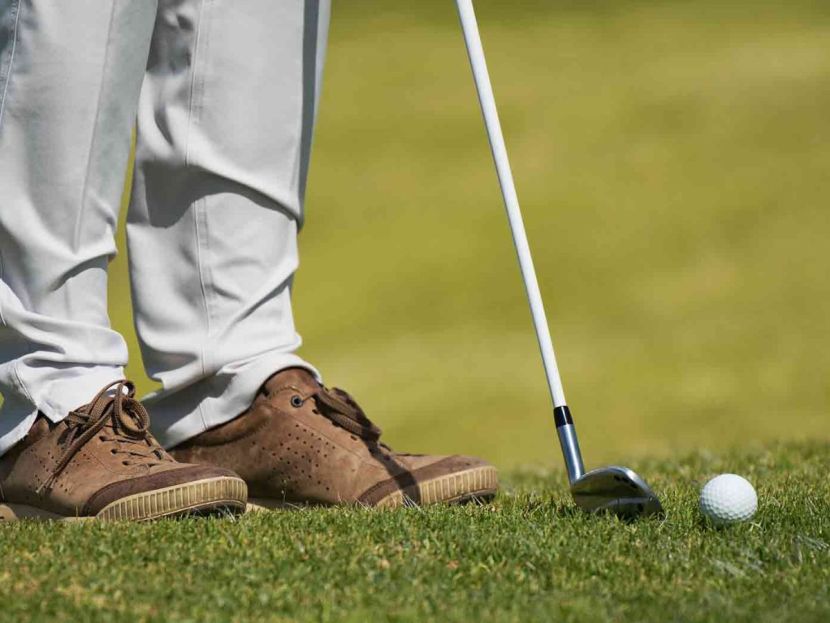
Hitting behind the ball, which is commonly referred to as hitting a shot “fat” in golf language, can be very frustrating. That sinking feeling refers to the immediate realization that your shot won’t reach its intended target.
Many golfers can’t bear to watch as their shot falls short of the green after hitting it fat. To improve your game, minimizing fat shots as much as possible is crucial.
To tell you the truth, as novice golfers, we are all too familiar with the experience of making poor strokes. Considering that it is something that takes place in the game, there is absolutely nothing wrong with it. Every once in a while, even the most skilled professional golfers will make shots that are less than perfect.
Golf can be very difficult, and it’s normal to experience setbacks while playing. However, it is particularly discouraging when you miss hitting the ball. When you hit the ball behind it, you immediately know it’s a bad shot because you feel the club hitting the ground instead of the ball. Realizing this right away can be disheartening, causing increasing frustration as you continue playing.
In this article, we’ll provide some guidance to help you rectify this issue. While hitting behind the ball is commonly associated with irons, we’ll also address concerns related to the driver.
6 Fixes To Stop Hitting Behind The Golf Ball
Check Your Distance from the Golf Ball
Incorrect setup position is a common cause of striking behind the ball. A common cause of chunked shots among golfers is standing too near to the ball.
It could take some trial and error to determine the ideal distance from the ball. Verify that your arms are relaxed and not overly extended. When you swing the shot, make sure you have adequate room for your hands to move freely.
Your height, stance, and the type of club you’re using will all affect how far you should stand from the ball. The likelihood that the club will strike the ground before the ball increases if you stand too close to it. We call this a fat shot.
Ball Position from Left to Right
Having the ball in the right position is very important for hitting the ball consistently. For most iron shots, it is best to position the ball in the middle of your stance. But remember that the perfect ball position might change based on the club you’re using and the kind of shot you’re making.
If you place the ball too far forward in your stance, especially when using irons and wedges, you could strike the ground behind the ball. It is best to place the ball forward while using woods, drivers, or lower lofted hybrids. When playing irons and wedges, it is generally advised to center the ball in your stance for best results. You can hit the ball more accurately and prevent hitting the ground before it by changing where you place the ball.
Check This One: 9 Longest Golf Holes in the US That You Can Play
Swing Path
To avoid fat shots, it’s important to maintain a proper swing path. Striking behind the ball is often caused by an excessively steep swing path. This often occurs when the implementation of the takeaway is done poorly, resulting in a significant decrease.
To address this issue, it is important to focus on initiating your swing in a gradual manner and avoiding any sudden movements or rushes. Avoiding chunky shots can be achieved by promoting a shallower swing path and ensuring a smooth takeout. To improve the quality of your ball striking and reduce the chances of hitting behind the ball, it is important to maintain a slow and deliberate swing motion from start to finish.
Shifting Your Weight
In golf, it’s imperative to shift weight properly to prevent fat shots. This part of the swing is difficult for many golfers, which causes inconsistent ball striking. When you swing, your weight should move from your left foot on the downswing to your right leg (for right-handed players) on the backswing.
Hitting behind the ball is a possibility if weight is not transferred appropriately. If weight transfer is insufficient, some golfers may experience a dip in their action or feel as though their shoulder descends throughout the swing. You may evaluate your weight transfer by seeing how your right arm moves during the swing.
Make Sure Your Gear is Right
When it comes to your golf game, it is true that the equipment you use can have a huge impact. It is possible for your swing to be improperly fitted to your clubs, which can result in inconsistencies and poor shot-making. When you are using a club that is either too heavy or not optimized for your swing, it can be challenging to perform shots in an effective manner.
Having a golf fitting done by a professional is a great way to ensure that your equipment is perfectly tailored to the unique aspects of your swing. An expert will assess factors like your swing speed, tempo, and ball flight tendencies during a fitting session to provide personalized recommendations on the clubs that best suit you. Aside from other factors, this might require adjustments to the club’s length, lie angle, shaft flex, and grip size.
Practice on the Range
Regular practice is crucial for enhancing any aspect of your game, including effectively handling fat strokes. Regularly practicing at the range can greatly enhance your swing mechanics, consistency, and overall technique. By trying out various strokes and club choices, you can enhance your skill in hitting the ball cleanly and make your swing more comfortable.
Make sure to assess your setup, posture, and alignment using alignment sticks or clubs as they can be very helpful tools for this purpose. Mastering the art of a powerful golf swing starts with ensuring proper alignment and setup. By making even the slightest adjustments, you can significantly enhance your ball-striking skills. Enhance your precision and reliability on the course through regular practice of correct alignment and setup. These habits can be easily integrated into your game.